The Sagas and Eddas speak at length on magic and no one is so central to that role as the seiðkonaor volva. Seidr is a shamanistic approach to magic that differs from galdr, which involved singing or chanting the runes. Despite that numerous references to these practitioners of magic, we know little of what actually went on and can only guess at some aspects.
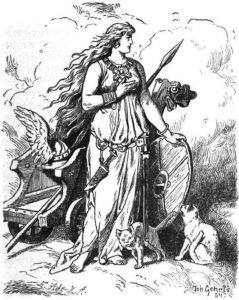
In the Ynglinga Saga, Freyja is the one who brings the magic art to the Aesir:
Njord’s daughter Freya was priestess of the sacrifices,
and first taught the Asaland people the magic art,
as it was in use and fashion among the Vanaland people.
Odin learns magic from Freyja, though in the Lokasenna, Loki accuses him of learning it from the Sami people thus:
For a man to practice seiðr was considered especially shameful and unmanly. He was thenceforth known as ergi. It is likely though, given the shamanistic way seiðr was practiced, that is was brought learned from the Sami people.
Some hints as to the nature of the magic they used might come from accounts of later medieval witches who were supposed to have rubbed a strange ointment of herbs upon their broomsticks upon which they rode naked. Francis Bacon listed the ingredients of the witches ointment as “the fat of children digged out of their graves, of juices of smallage, wolfe-bane and cinque foil, mingled with the meal of fine wheat.” Other recipes listed nightshade and henbane among other poisonous plants with toxic alkaloids. Not surprisingly, nightshade is notorious for producing a sensation of flight. Henbane also produces a hallucinogenic reaction.
Grave goods of a Norse seeress including the mysterious wand
When archaeologists unearthed a rich grave of a woman at Fyrkat, Denmark from the tenth century, they found among many other grave goods, a pouch containing the seeds of henbane and cannabis both with mind-altering properties. Even henbane petals rubbed against the skin have been reported to have caused an experience akin to floating or flying. How much more so when combined with nightshade and mandrake, plants with high levels of toxic alkaloids such as scopolamine, hyoscyamine, and atropine. Such plants were placed in a fatty substance by medieval witches and applied to a distaff or broomstick and ridden upon. These herbs can take very quick effect on the skin and more so against the mucous membranes of a woman’s vagina. This would explain the sexual element darkly hinted at by later Christian writers, but never properly alluded to. In any case, asmale practitioners of seiðr were looked on with scorn by their contemporaries, it is possible that seiðr required one to be sexually passive, or perhaps there were actions associated with the anointed distaff that disagreed strongly with medieval Scandinavian sensibilities of gender roles, including that of fiber arts as we shall explore in part three of this study.
Any thoughts on this subject? I would love to hear from you. Comment below.