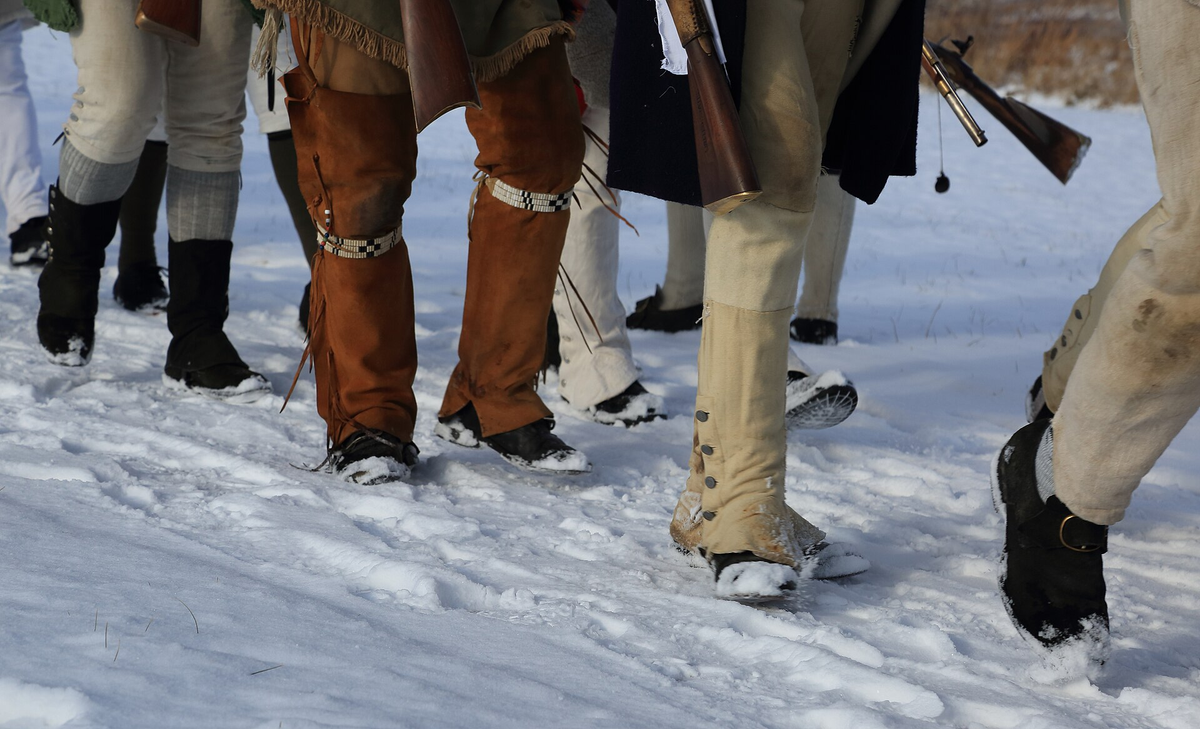
View from the Backcountry – the American Revolution on the Western Frontier

The American Revolution is frequently framed — especially in modern academic circles — as a political struggle between a colonial bourgeoisie and a distant imperial government that had grown out of touch with the lives and labors of its subjects. In this familiar telling, the Revolution is driven by pamphlets, assemblies, and the grievances of people who — or whose ancestors — had crossed the Atlantic in search of religious liberty, political autonomy, and economic opportunity.

The American Revolution is frequently framed — especially in modern academic circles — as a political struggle between a colonial bourgeoisie and a distant imperial government that had grown out of touch with the lives and labors of its subjects. In this familiar telling, the Revolution is driven by pamphlets, assemblies, and the grievances of people who — or whose ancestors — had crossed the Atlantic in search of religious liberty, political autonomy, and economic opportunity.

 To a degree, that is true. And yet there were many – the children of convicts and Scots and Scots-Irish – who had very little choice in the  matter or who had already suffered great discrimination and hardship in their native lands. It is primarily these who ended up in the buffer zone of the colonial frontier and who were looked upon by the British government as a human shield between themselves and the native tribes who pushed back against settler migration. As always, the British government maintained a supposed policy of maintaining political alliances with these tribes and at least outwardly, forbade its own citizens from pushing further into these territories, as outlined in the Proclamation of 1763 following the French and Indian War.

And yet there were many others whose experience of the Revolution looked nothing like this — the children of convicts, transported laborers, Scots, and Scots‑Irish who had endured discrimination and hardship long before the first shots were fired. These were the families who had little choice in their circumstances and who were pushed westward into the buffer zone of the colonial frontier.

To the British government, these frontier settlers served a convenient purpose: a human shield between imperial interests and the Native nations resisting settler expansion. Britain maintained formal alliances with those tribes and, at least on paper, forbade colonial settlement beyond the Appalachian divide. But paper boundaries meant little to families with nowhere else to go — and even less to the native nations who saw their homelands shrinking year by year.

The American Revolution is also frequently framed as beginning with Bunker Hill and “the shot heard ‘round the world,” made popular by Ralph Waldo Emerson. But that is a poetic imagining only. In reality, the American Revolution had begun well before that, in the backwoods and deep hollers of the frontier in Lord Dunmore’s War of 1774. Lord Dunmore was frequently accused of keeping the settlers occupied and distracted as he marched men about in the wilderness while the main theater of the conflict occurred at the battle of Point Pleasant now Point Pleasant, West Virginia. The conflict exposed a widening rift of discontent between backcountry settlers and the Empire. I often say that Lord’ Dunmore’s short-lived war was the true prologue to the real conflict that finally exploded into the American Revolution. It coincided with The Intolerable Acts that came forth as a result of the better known Boston Tea Party, sending over three hundred chests of tea into the Boston Harbor. Yet Point Pleasant showed that the emerging conflict was not isolated to any given  area.

 The seeds of discontent had clearly been sown not only in the settled farms and valleys of New England but in the far-flung frontier and woods of Virginia and Pennsylvania.  Some could argue reasonably that indeed, it had been begun even earlier during the French and Indian War, a conflict that cost the British Empire considerably and for which it taxed colonists harshly, thus leading to the uprising that would be the American Revolution.  The pockets of the East India company also were being richly lined at the expense of the colonists. Then as now, corporate interests were given presence over the people. The East India company was protected by Parliament. It had its own diplomats, army, navy and tax system and is not well enough considered in the system that led to the eventual overthrow of the Empire that stood behind it. Yet this is out of the scope of the current article, which is the way the Revolution was experienced on the western theater.

To further widen the division, many of those settlers of Scotsh-Irish origin had been given no reason to love the British Empire. Many of their forbears had been uprooted from lowland Scotland and forcibly settled in Ulster Ireland the century before.

To those who hunted the wild woods beyond civilization and received very little news besides that which was traded over furs and corn flour at far flung trading posts, the war must have seemed very far away indeed. They had little to connect them to far away Boston or Williamsburg. And much of the conflict was driven by interaction with native tribes sent among them as mercenaries by the British. Occasionally they went up against uniformed soldiers such as George Rogers Clark’s campaign against a garrison at Vincennes. Here, Henry Hamilton  the “Hair Buyer General” was captured at last by Clark, though he had been coordinating from Fort Detroit which was the British nerve center of the western theater and highly overlooked by most modern Americans trained to remembered Bunker Hill and Valley Forge. Also instrumental on the western theater was Fort Pitt (originally the French Fort Duquesne during the French and Indian War and rebuilt by the British) captured or more generally politically seized by Patriot forces early in the war.
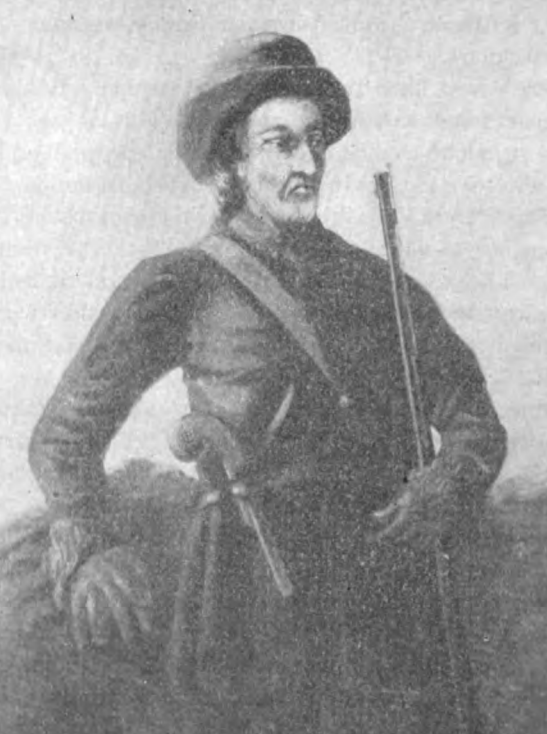
 And there were, contrary to popular belief, provincial loyalists on the frontier, the most notorious of which may have been Irishman, Simon Girty, popularly known as “Dirty Girty” for his perceived betrayal of frontier patriots and his alliance with native tribes sent against settlers.

Longunters themselves were mostly apolitical, concerned only with   who controlled the forts, the powder supplies and the fur trade. Yet even they could not be immune to the shifting political climate far beyond the Blue Ridge Mountains and extending to the terrain of the buffalo of the Kentucky cane brake, as I portray in this scene from The Longhunt:

“How long will the war go on when even Parliament does not support the King?”  Hubbard asks.

“The King does vat he vants,” the taciturn Sweitzer says. He speaks even less than Johnnie if that is possible.

“Fook the King,” Johnnie says solemnly raising the flask of whiskey.

“Fuck the King,” echo the others. A vulgar toast.

“Last I heard,” McWilliams says, “Washington was up near the Hudson. Still holding the line.”

“And the French?” Hubbard asks.

“In Boston, maybe. Or gone. Who knows.”

They fall quiet again. The whiskey warms their bellies, but not enough to forget the cold. Or the war. Or the fact that none of them knows what day it is. Or that the war here is a different war being fought among the trees and shadowed things than what is being waged as far away as Saratoga or the Hudson Highlands.

Current events have a way of bringing all conflict  into the open however. The Treaty of Paris officially ending the war in 1783, did nothing for the settlers’ experience and indeed they were only intensified.  Whatever was said on paper in 1783 was not experienced by those in the west. We then went on to fight the Northwest Indian Wars that supposedly concluded with the Treaty of Greenville after the disastrous defeat of Saint Clair upon the sordid ashes of which, Fort Recovery was built in open defiance.  

To most modern historians, there is a clear delineation between the War for Independence, The Northwest Indian Wars and the War of 1812 (a fresh reopening of old wounds) but for those experiencing them on the frontier, it might be better to frame it as one long continuous conflict stretching from The French and Indian War through the early growing pains of the 19th century. This could be said for settler and native alike. There was no room to breathe. There was no interlude. And this is itself perhaps the most defining difference between the experiences of the western woodsman and the eastern farmer.
The Teeth of the Mighty Wasioto

https://commons.wikimedia.org/wiki/File:Cumberland_River_1km_from_mouth.JPG
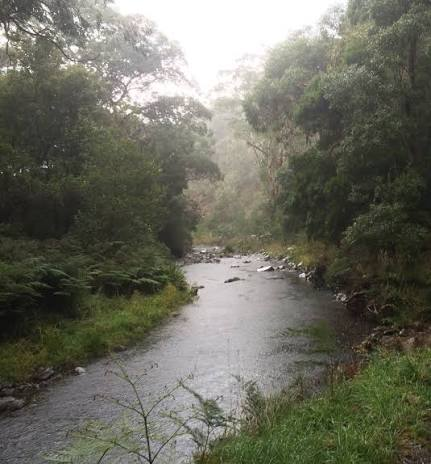
The Cumberland River today. 1km from the mouth,

There is a wide river ranging through Appalachia, now known as the Cumberland, named so by a colonial explorer, Thomas Walker in 1758, presumably for the Duke of Cumberland. The river was known as the Wasioto by the Cherokee who hunted and lived in the area. Likely it was a name that continued to be used also by the white men who also hunted along its banks and traversed its treacherous waters. The Cumberland took a long time to take hold as a name.

What there was no uncertainty of was the danger in crossing it. By the time longhunters returned with their horses loaded down with pelts, the late winter snowmelt had swollen the Cumberland and her tributaries and made crossing difficult and fraught with danger.

Snaking its way almost seven hundred miles  through limestone bluffs and cliffs of sandstone, three hundred of which flow through what is today Tennessee. Stunningly rich in biological diversity and home to more than three hundred fish species, as well as numerous avian, reptilian and mammalian life, one can only speculate what this rich and wild area looked like to early white and native hunters, long before there were bridges and highways and the Cumberland lay like barrier between the hunting lands and home.

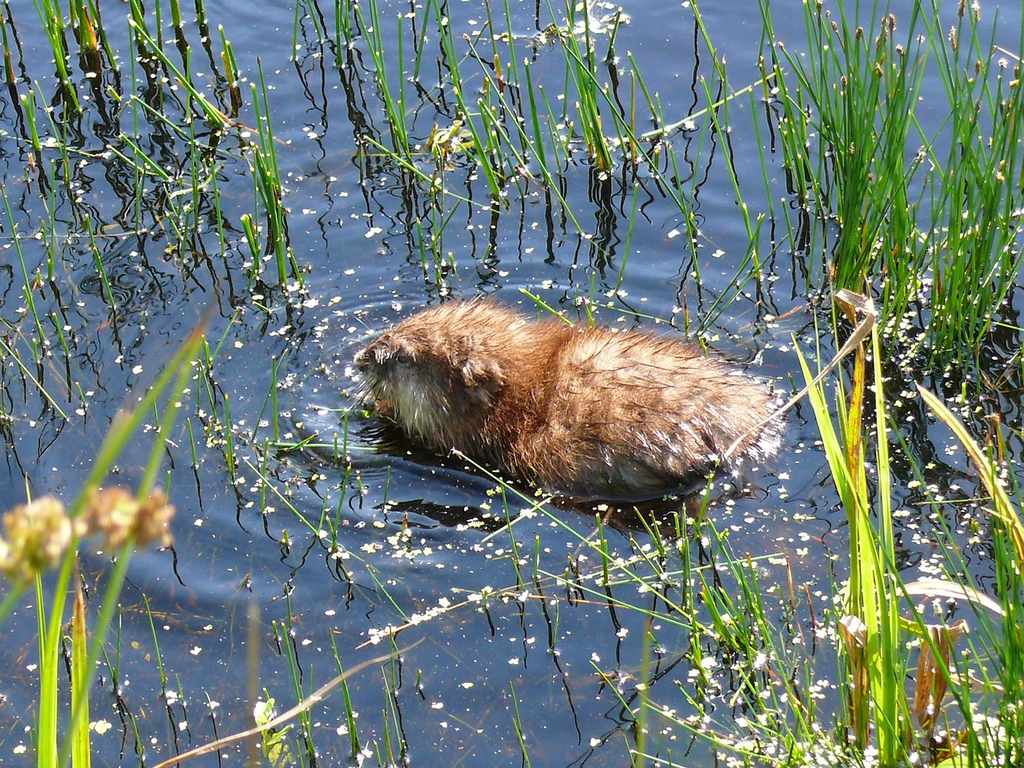
Appalachian muskrat

The Lower Crossing of the Wasioto has no bearing in history and is something I created myself. Hunters frequently had shorthand for the geography they frequently navigated and it was just such a plausibility that brought about the name the Lower Crossing. However the crossing itself was no fiction and it did not take much to dramatize such a hazardous affair.

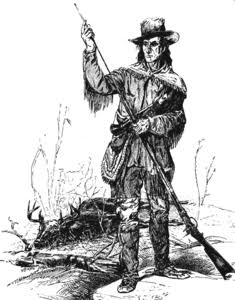
Longhunter Image courtesy of the Missouri State Historical Society (Creative Commons).

Johnnie goes next with the mare carrying Katie and one packhorse. The river is cold, bitingly so. It jolts the breath out of him. It swirls around his waist. The mare steps high, ears flicking. Katie shifts with her, every joint stiff. He glances back at Katie. She has said nothing since he handed her the pistol. Her face is white, making every freckle stand out. The mare whickers softly and Johnnie shushes her. Johnnie’s voice is a low chant—half nonsense, half promise—in that strange tongue of the Shawnee, and the pack horse finally lunges forward, water spilling off its flanks like surrender, they stretch their necks out into the current and begin to swim. The water comes up to Katie’s thighs now. The linen shirt clings to her like a second skin. Johnnie feels the river bottom give way under his feet, and he braces against the current. It’s biting deeper now—into knees, into thought, into the old scar on his ribs that aches like the Deuce.  The water is murky. Dark. Treacherous. Logs and debris come their way and Johnnie guides the horses, dodging them. Out of the corner of his eye, he sees the dogs plunge into the water after him. No fear, those dogs.  The mare trusts Johnnie. Her eyes are wide, but she pricks her ears in the direction of his voice. The pack horse is floundering. Johnnie keeps an eye on him. He’s one flicker away from panicking. The pack horse makes no sound. Just that floundering twitch—one shoulder dipping, nostrils flaring. Johnnie knows the look: the half-second before a beast forgets how to float. He moves to the pack horse’s halter and strokes the animal’s neck. They dodge a branch that comes out of nowhere. Johnnie can barely think for the cold, but he keeps on crooning to the horses.

The Longhunt by G.S. Brown

Navigating the river’s icy churn was far from their only concern. The newly formed nation was at war with Great Britain and many tribes, especially the Cherokee were mercenaries for the most powerful military on earth at the time. Far from the least of these tribes were the Chickamauga Cherokee led by Dragging Canoe who had no love for the settlers moving into his ancestral lands.  Even if the long hunters were to make their way down to a reasonable ford on the river, there was always risk of ambush. And men preoccupied with handling fretful horses and valuable loads of furs were an easy target.

He guides the mare and the remaining pack horse out into the water. Ahead, Sweitzer’s horse falters midstream. Not from fatigue. From scent. The mare snorts once—ears rigid, flank twitching. Something’s changed. He glances behind them. On the bank he has just left, shadows slink from the trees. They melt to the bank like water. Like serpents winding through the grass, startling you before you even know they are there. He urges the mare forward. She is fatigued. She will have to put what she can into this last trip. Out of the corner of his eye, Johnnie sees the bronzy form of a Cherokee warrior. He is raising a musket. And he is pointing it at Johnnie. Johnnie feels the breath of the musket ball near his ear. The horses are too almost fatigued to be spooked from the gunfire. Ahead another ball hits the water in front of Sweitzer. They are still within range of a musket ball. That is too close. The balls slap the water like hail—not random, not wasted. The river hisses back, each impact a punctuation mark. Sweitzer curses. Johnnie leans into the mare, whispering her name like a shield. Something slaps his shoulder—hard. Not a punch. Not a burn.

The Longhunt by G.S. Brown

In The Longhunt, a party of longhunters led by Hoagland are forced to take a less desirable crossing than the Lower Wasioto, as it is guarded by men led by Dragging Canoe.  Any such crossing was dangerous, choosing a far less preferable one could mean death.  The spring snowmelt covered treacherous shelves of shale and shifting bottoms. Debris swept down from higher elevations threatened themselves and their horses.

The water churns where the horse went under—slick, dark, and silent. The shelf lies inches below the surface.  The pack horse lunges left, seeking ground that isn’t there. The river doesn’t roar—it folds him in. Johnnie plunges into the water again, grappling for the halter. He feels himself caught by the undertow like the horse. Water sears his lungs. He feels the shale river bottom and then it is gone from under his feet. He feels the animal’s great body against him, feels himself being pushed further under the water by its thrashing body. This is it, he thinks. He has seen men succumb to the river before. Men with years of experience. The river takes no prisoners. Her teeth are edged with the blood of countless travelers. The pack horse is already gone. Swept into the river’s embrace.

The Longhunt by G.S. Brown

The Wasioto was a liminal threshold. A feral embrace of Mother Nature that signaled one last barrier back to what passed as civilization. While many settlers were led across the famed Cumberland Gap, only the most intrepid actually dared venture the slashing knives her waters bared to the unwary and the defenseless. Once on the other side, the longhunters were in a less contested country, filled with dense hardwoods and a moment to catch their breath and cross the ridge country before the final threshold of the Cumberland Gap. The Wilderness Road took the longhunters through this final leg of their journey, a blazed trail that McWilliams calls “Boone’s damnable Road.”

The journey was not for the faint of heart and the longhunters were often the first to traverse the trails that had been first footpaths of the native Americans. After them came settlers. My five greats grandmother Anne McIntyre was a baby born in 1779 in the worst of the confrontations between native and white settlers in what is today Davidson County, Tennessee, before even Fort Nashborough (now Nashville, Tennessee) was officially organized. Those that chose to come out to a place this wild at that time were the longhunters, the wilderness scouts, those intrepid enough to brave the teeth of the wilderness and the Wasioto.

Fort Caswell, the Notorious Jacob Brown and the Cherokee

In my novel, The Longhunt, Katie Campbell journeys with a band of longhunters from the canebrake of wild Kentucky to Fort Caswell, later known as Fort Watauga near what is today Elizabethton, Tennessee. It was named for Richard Caswell the governor of North Carolina of which that area was then considered a part. 

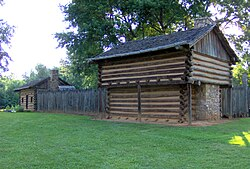
Today the fort has been reconstructed at Sycamore Shoal State Park, approximately 1500 yards from the original site. Most historians agree that the fort was a collection of dwellings enclosed by a stockade and the current structure reflects that. 

Reconstructed Fort Caswell at Sycamore Shoals State Park near Elizabethton, Tennessee Courtesy of Wikimedia Commons

We get a view of the fort from Johnnie’s and not Katie’s eyes here: 

They are down to three men, with their horses, pelts, gear and dogs, riding at their heels, tongues lolling laconically, but even so they make a formidable convoy as they enter the fort. Fort Caswell has not been commissioned for long. Johnnie remembers when it first went up. He remembers when it nearly burned. He remembers how it held his grief…and then his vengeance. The traders are set up here as they were at Anderson’s Blockhouse. But Johnnie rides past them. He has things to do first. He swings his leg over the mare’s neck, dismounting and leaving Katie on the mare. “Wait here,” he says quietly. He wishes to spare her as much attention as possible. He sees her hunched shoulders, the way she shrinks against the mare as if to make herself invisible.  John Sevier is waiting by the blockhouse. If Johnnie knows anything about Sevier, he has watched their arrival from the palisade and has been waiting for them.  

“You bring anything more than pelts?” Sevier is not a man known for polite conformities. 

“Might be,” Johnnie responds. “Might have some maps.” 

Sevier nods. “Come in and talk to Carter before you deal with them pelts.” Sevier is Lieutenant Colonel here at the fort. They served together in the campaign against the Cherokee towns. Johnnie nods to Katie and she slides down from the mare, shadowing his step into the blockhouse. 

The blockhouse is the spine of the fort — hewn logs stacked tighter than breath, chinked with clay and ash.  Inside, the light is scarce. A single window slit pours a blade of sun across the rough plank floor, slicing through dust motes that hover like old ghosts. The hearth is smeared with yesterday’s ash, and the air smells faintly of grease, leather, and cold iron. On the far wall, a rack of muskets leans like sentinels. A cloak hangs on a peg beside a saber with a rusted hilt. Above the doorway, an antler nailed crosswise casts a bent silhouette — not quite ornament, not quite omen. 

The fort was constructed around 1775 as a refuge for White settlers settling in the region of the Holston, Watauga, and Nolichucky rivers and later was the muster point for the Overmountain men in the famous Battle of King’s Mountain which resulted in an American victory against Loyalists led by Patrick Ferguson. Among the Overmountain Men was John Sevier who has a minor character role in The Longhunt. He is considered one of the founding fathers of Tennessee. 

In the summer of 1776, Cherokee chief Dragging Canoe (Cherokee: Tsiyu Gansini), determined to drive White settlers out of the area once and for all, put his allegiances in with the British Crown. Calls for settlers to leave the area by the British Indian Department were repeatedly ignored. Fort Caswell was just one fort in the way of Cherokee angry at the sale of their lands to settlers. In addition, the Cherokee were as bitter enemies with the Shawnee, as they were with the settlers, the former a long standing hatred.

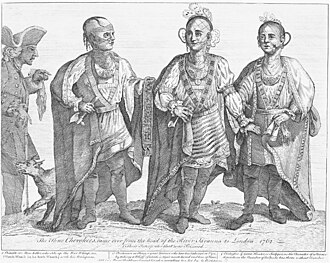
Cherokee Natives. From an old woodcut, public domain

Though not mentioned in sources as extensively as the 1776 attack, there were other skirmishes preying upon the settlements around the fort, leaving settlers in a constant state of high alert and fear. It is just such a round of raiding parties that left wounded and dying, clinging to life and hope, fleeing to the refuge of Fort Caswell as here, in The Longhunt: 

The fort is less a refuge and more a crucible of pain. There is a woman who rocks back and forth and asks about her husband. Even though she saw him scalped in front of her. There is a boy who was shot with an arrow in his leg. An easily survivable injury except that it is putrefying. There is a young mother who has just given birth, and she cannot get her baby to nurse. There are those who are suffering from smoke inhalation, broken bones, lacerations. These are the ones who escaped. Some might say they are the lucky ones. But they carry the language of desolation. They are the ones who lived to see their loved ones carried off. Or hacked to death without mercy in front of them.   

William Christian, colonel over the Virginia militia arrived and put paid to any more incursions. However, a supply of powder was crucial to the maintenance of the fort’s safety.  Well-known in the area was a trader named Jacob Brown. He first cast his lot with fate by buying up large tracts of land from the Natives with the end in sight if selling them at a considerable markup to the White settlers. As a member of the Watauga Association, Jacob’s signature showed up on a document known as Watauga Petition asking for more formal government and protection from North Carolina, something they felt owed as they were still being taxed by said colony. With the Revolution in full swing, resources were spread thin and there really weren’t enough men or arms to go around for the more westerly frontier settlements. In the meantime, Jacob Brown amassed over 500,000 acres of land bought off the Cherokee. His plan failed not least of which he couldn’t get the price he wanted and most of all because it was decreed that the purchases were null and void under a 1763 British proclamation prohibiting such sales. In the end, Jacob Brown is best known for being an adulterer, living with a woman named Nancy Henderson while his wife and children back in South Carolina apparently remained oblivious to the affair until such time came to deal with his estate after his early death due to a hunting accident.  

I really have no actual knowledge beyond these few facts of what kind of a man Jacob Brown was, nor his mistress Nancy Henderson and so they have suffered at my hand in the story of The Longhunt. 

The trading station is made of reinforced squared off log walls. Gun ports give testament to its defensive use. There is a cabin nearby and an unattended cookfire in front of it. The men dismount near it. A woman comes to the door of the cabin, wiping her hands on her apron. Here is a woman whom life had carved a face as sharp as a tomahawk and about as soft. A woman who wasn’t handed beauty, so she’s taken flint-sharp clarity instead. Her deep-set eyes scan the men in her dooryard. “Jacob’s out back,” she says in a voice that has the rasp of too much pipe tobacco in it, a guess of Johnnie’s that is proved correct as she replaces a clay pipe between her teeth, eyeing them warily. Sevier shrugs and goes to find Jacob Brown. 

The others wait in the door yard. In a moment or so, Sevier returns with Jacob. Jacob is as lean and ill-gotten as Johnnie remembers him. He glances at the men, at their blood-stained hunting frocks, at the fresh, stinking scalps on the belts of Johnnie and Davidson. “Trouble?” he says 

“Might could be,” Davidson says. “Ran into a pack of Cherokees on the way here. Lost one man.” 

“I had group of ‘em come by here yestiddy and take all my whiskey stores and some of my corn flour,” Brown says. 

In all, men and women did what they had to, and they lived in a far different era than we do today having to make vastly different choices. Fort Caswell is built on the sacrifices of such men and women, their sorrows, their losses and even  their dreams, just as much of America came to be.  

The Longhunt is not meant not be a story of an ideal of how moderns think it should be portrayed, but rather as it was. As it had to be, a struggle.  A struggle that shapes the characters today of the people of Appalachia. People who are warm hearted, but pragmatic and resourceful. As I state in the beginning of the book:

If you are looking for heroes, you may not find them here. But if you are looking for truth—raw, complex, and unvarnished— you are welcome to walk with me.