
Furthermore, sweet-smelling scents was not merely the province of the elite. Because of the belief that health was made of a unique balance of humors, a sort of aromatherapy was engaged in which humors could be balanced by the smells of certain aromatic oils. Byzantine gardens, therefore, had areas set aside for aromatic flowers from which could be distilled some of the more fragrant oils.
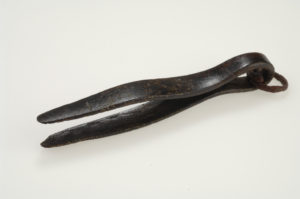
Mirrors, tweezers and similar hygiene equipment would have been commonplace in a not only a Byzantine home, but a Varangian one as well. Numerous excavations have revealed hygiene implements from Viking-era graves including ear spoons, tweezers and dental cleaning tools.
To a certain degree my character Theophana is based on Basil II’s niece , the Empress Zoe, who was obsessed with beauty, even into her old age. In The Well of Urd, Theophana’s habits are described:
No longer young, she was still vain. She spent enough on costly unguents and cosmetics. She had royal jelly and saffron imported from Egypt at great expense to her husband. She also insisted on bathing once a month in wine, a habit he greatly detested. He did not know if it was the cosmetics or the way she had with those unearthly eyes, but men still managed to find her attractive and enthralling.
Michael Psellos wrote that Zoe turned her chambers into cosmetics laboratory in which she created cosmetics and ointments to preserve her beauty well into old age. Also in common with the fictional Theophana, Zoe was known for her numerous infidelities. Eventually, her husband, Romanos was drowned in his bath by assassins. Both historians John Skylitzes and Michael Psellos agree that Zoe was complicit in his death. Byzantine women did not use as heavy cosmetics as their earlier Roman counterparts. This was a good thing. A common cosmetic of Western Rome was white lead, used to make skin appear fashionably pale. It is also very toxic. For eye liner and darkening eye brows and lashes, kohl was very popular. Kohl was a dark-colored powder made of crushed antimony,(Stibnite. Unfortunately it is lead-derived and toxic) burnt almonds, lead, oxidized copper, ochre, ash, malachite and chrysocolla. Stibnite is initially gray, but turns black when it oxidizes. It was mixed into a fat base and applied with a rounded stick.
High born Byzantine women would keep their cosmetics in little jars called pyxides. These could be of pottery, glass or ivory, sometimes sumptuously carved as this example shows.


